
Shanghai Library Talk---Nativeland and elsewhere
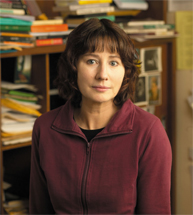
It is a great honour to be invited to speak at the Shanghai library? - a splendid building! – and I want to thank, above all, the Shanghai Writers’ Association for? sponsoring? my ?visit to your wonderful city. I want in particular to thank the ?honorable president , Mrs Wang Anyi, for hosting today’s event, and Hu ?Peihua for her consistent kindness and support in establishing my ?residency.?At ?formal events and ceremonies in Australia it is now the custom to open a ?speech by paying respects to traditional landowners, Aboriginal ?Australians. This enlightened practice follows from what I see as a kind ?of ethical evolution in my own country: there is now an understanding ?that all Australians, apart from indigenous people, have come from ?somewhere else over the last 200 years or so (a very short history ?compared to China) and that settlement has been damaging to traditional ?culture. Although Aboriginal people constitute less than 3% of ?Australia’s population, there is now a general awareness that they ?inhabited the continent with an unbroken settlement for over 60,000 ?years - longer than any other human community - and that their culture ?is spiritually rich, conceptually sophisticated and deserving great ?respect. An Aboriginal ‘elder’ will often open formal events by offering ?what is called a “welcome to country”: this courtesy acknowledges that ?Australia is undergoing what we call a process of ‘reconciliation’ ?between the settler and indigenous communities.?Australia ?is of course a postcolonial nation, both colonizer and colonized. ?Dramas of both domination and subordination are written into Australian ?experience. Our history is a layered one; there is the history of ?invasion – many of you will know that Britain established Australia in ?the 1770s as a penal colony to accommodate convicts; this penal colony ?then became a settler colony that involved the dispossession and ?mistreatment of the indigenous population. However Australia has always ?been multicultural, not English, and includes a history of welcoming ?waves of immigration from around the world. For example, as early as ?1803 there were records of Chinese people living in Australia; in the ?early 1800s there were pastoral workers from China, many from Fukien ?province, and when gold was discovered in the South East, in the 1850s, ?almost 30,000 Chinese miners arrived, many from Guangzhou. One of the ?major country towns, Bendigo, had almost 45% Chinese residents in 1851. ?The Chinese diaspora – and forgive my use of so many numbers? - ?is about 40 million world wide; and the Chinese contribution to my ?country, as to others, has been energetic, profound and deeply ?important. The impact of Chinese culture is very significant in my city, ?Sydney, which has a vibrant ‘Chinatown’ at its centre; you may also ?know that our second city, Melbourne, has a very popular Chinese mayor, ?John So. Mr So was named “world mayor’ in 2006 for his popularity and ?leadership. Our current Minister for Environment, the much respected ?Penny Wong, is Chinese-Australian. And I’m sure many here know that our ?Prime Minister speaks Mandarin. It is the hope of many progressive ?thinkers in Australia today that with the new government there will come ?a renewed understanding that Australia is located in Asia, not in ?Europe, and that our primary dialogues and interests are with our near ?neighbors.?Unfortunately, Australia also has a racist history.? In 1901, when the nation was proclaimed? - before then it had just been a collection of states - the ‘White Australia Policy’ was introduced.? This ?was an immigration policy designed to limit Asian immigration – partly ?because Asian people were so hard working and accepted less wages, but ?also because of racist ideas of white or European racial superiority.? The ?policy lasted until 1973. So Australia has a troubled and complicated ?history of establishing a national identity – separating from Britain, ?overcoming racism, learning to honour and respect cultural difference.?
What ?is distinctive about Australia is of course the land and the indigenous ?culture, and this is where settler Australians had much to learn from ?Aboriginal Australia. An Aboriginal person will not say: “the land ?belongs to me”; they will say: “I belong to the land.” It is a ?relationship that takes for granted that the natural world is a sacred ?place, that they are custodians of country, and that they must take good ?care of it. It is also a beautifully poetic relationship, since ?Aboriginals see their religion, their culture and their stories made ?visible in the land. Part of the task of settler Australians has been to ?enter into an imaginative relationship with what has proceeded them ?historically, to try to understand what this world-view means and why it ?is so precious. Before colonization there were over 250 Aboriginal ?languages, now there are about 16; but speakers number only a few ?thousand. The wrecking of traditional culture is something that settler ?Australians have had to acknowledge and try to repair. Every country has ?its injustices, its repressed stories and its growth into understanding ?the rights of its citizens; it is no different in Australia. The damage ?to indigenous communities was in part the consequence of a particular ?government policy – used from about 1910-1970 – of forcibly removing ?lighter skinned Aboriginal children from their families, leaving behind ?communities of distress and mourning. Those removed have become known as ?“the Stolen Generations”. On February 13th this year, our ?new Prime Minister, Kevin Rudd, formally offered an apology to ?Aboriginal Australians for the wrongs done to them in the name of the ?State and the Government. This was an extraordinary ceremony – and one ?of enormous importance in Australia’s history. Many ordinary citizens ?felt, for the first time, that what had been secret and shameful was now ?in the open and could be dealt with. As a writer I found the apology ?particularly moving because it was a reminder of the essential power of ?words. The symbolic level of culture that happens in words includes ?praise, protest, celebration, seeking justice, witness, understanding, ?The crafted speech of apology and the use of the single word, “sorry”, ?has released a new spirit of reconciliation in Australia and continued ?the healing of the trauma of colonization. My latest novel “Sorry”, soon ?to be released in Mandarin, is my own small and modest meditation on ?the idea of an amnesiac history, a history that has forgotten its own ?causes and effects and lost the words for naming and identifying the ?violence in peoples’ lives.? ?Let ?me now talk a little more personally. Part of my childhood was spent in ?a tiny town called Broome, which is in the remote north-west of Western ?Australia. Broome was an Asian and Aboriginal town founded on a ?pearling industry ( pearl workers had been exempt from the White ?Australia Policy). It had been a thriving, busy town until the First ?World War, when the international price of pearl shell was very high. ?The majority population was Chinese, Japanese, Malay and Flipino. When I ?was a child, Broome was in decline and had a population of only about ?1,000 people of whom 400 were considered? ‘white’ ?or European. I feel privileged to have grown up in such a place, one in ?which I was in a minority, and saw the appeal of an Asian-indigenous ?multi-culture. In the sweet solidarity of childhood, I did not know that ?race or ethnicity could be a barrier to friendship. My first loves were ?all in this place: it may account for why I am more attracted to Asia ?than Europe. As a child I loved Chinese food – certainly much better ?than Australian cooking – and have very strong memories of the tastes, ?scents and customs of the town. I remember the special thrill of Chinese ?firecrackers, lit at the end of the jetty every November. I can still ?see the coloured lights falling in flower-shapes from the sky and ?dissolving, to our cries of joy, in the night-black ocean. I loved to ?sit in the melancholy peace and quiet of the Japanese cemetery, where ?pearl divers and their families had been buried since the 1880s. I loved ?the Chinese hawkers carts outside the Sun cinema, Australia’s oldest ?outdoor picture house; and the Chinese grocery stores, Tangs’ and ?Wings’, filled with products I did not recognize, often stamped with ?seductive images of red dragons and flying cranes.? As ?a child this represented the ‘exotic’; it is only as we grow we learn ?the complexities of other peoples, their difficult histories as workers ?and immigrants, and the true significance of their cultural practices. ?In ?this beautiful library, I would like to conclude by affirming the ?importance of books in helping us to use imagination and spirit to ?understand each other across cultures. This will always be a partial and ?incomplete knowledge; but it is important that what stories offer us – ?the inner worlds, the feelings, the struggle of other lives to make ?meaning, as we ourselves struggle – these are imaginings that bring ?people closer together, in mutual respect. I want again to thank the ?Shanghai Library and the Shanghai Writer’s Association for giving me ?this opportunity to speak to you today in cross-cultural friendship.?


